
Daily Makeup – Day 2
Daily Makeup
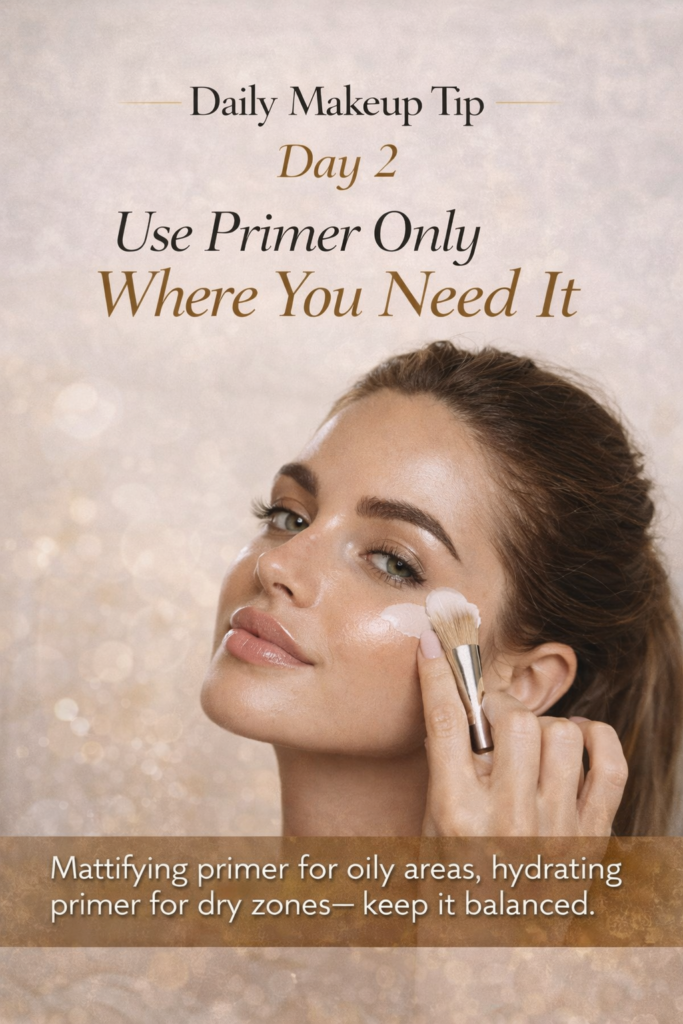
In the world of celebrity beauty, flawless skin rarely comes from piling on products. The real red-carpet secret is precision—knowing exactly where to apply makeup and where to let skin breathe. One of the most misunderstood products in any makeup bag is primer, and today’s expert tip is simple but powerful: use primer only where you need it.
Top makeup artists who work with A-list celebrities agree—over-priming can sabotage even the most luxurious makeup routine. When applied strategically, primer enhances texture, extends wear, and keeps skin looking fresh, never heavy.
Daily Makeupt
The Myth of “All-Over Primer”
For years, beauty tutorials pushed the idea that primer must be applied evenly across the entire face. While this may sound logical, skin doesn’t behave the same way everywhere. The forehead produces more oil than the cheeks, and areas around the mouth are often drier than the rest of the face.
Celebrity makeup artists treat the face like zones, not a single canvas. Applying one type of primer everywhere can cause makeup to slip, crease, or separate—especially under bright lights or long hours.
Daily Makeup
Why Celebrities Use Targeted Primer Application
Celebrities are photographed from every angle, under unforgiving lighting, and often for hours at a time. Their makeup must hold up without looking cakey or overdone. Targeted primer application helps achieve exactly that.
By applying primer only where it’s needed, makeup:
- Lasts longer without touch-ups
- Looks smoother and more skin-like
- Prevents excess shine without drying the skin
- Feels lightweight and comfortable
This approach allows foundation to sit naturally, rather than floating on layers of product
Daily Makeup
Understanding Your Skin Zones
Before applying primer, take a moment to understand your skin’s needs.
The T-Zone:
This includes the forehead, nose, and chin—areas that tend to produce more oil. These zones benefit from a mattifying or pore-blurring primer that controls shine and smooths texture.
The Cheeks:
Cheeks are often normal to dry. Heavy mattifying primers here can make skin look flat or textured. Many celebrity artists skip primer altogether on this area or use a light hydrating primer.
Around the Mouth & Nose:
These areas can crease easily. A small amount of smoothing primer helps foundation stay even without settling into lines.
Daily Makeup
The Celebrity Artist Method
Red-carpet makeup isn’t rushed—it’s intentional. Celebrity artists typically apply primer using fingertips rather than brushes or sponges. The warmth of the fingers helps the product melt into the skin, preventing buildup.
They start with the T-zone, pressing primer gently into the skin instead of rubbing. If needed, a hydrating or smoothing primer is lightly tapped onto dry areas. The rest of the face is often left untouched, allowing natural skin texture to shine through.
Daily Makeup
Why Over-Priming Backfires
Using too much primer can create a slippery surface, making foundation slide rather than adhere. It can also cause products to pill, especially when mixed with skincare underneath.
Another common issue is uneven texture. When primer builds up in areas that don’t need it, makeup can look thick and unnatural—something no celebrity look ever aims for.
Less product, applied strategically, always wins.
Daily Makeup
Choosing the Right Primer for Each Area
Not all primers are created equal, and using the wrong type in the wrong place can undo your entire look.
- Mattifying primers are best for oily zones only
- Hydrating primers work well on dry or dull areas
- Blurring primers help smooth visible pores and fine lines
- Illuminating primers should be used sparingly for glow, not all over
Celebrity artists often use more than one primer in a single look—customizing application for flawless results.
Daily Makeup
How This Tip Transforms Everyday Makeup
You don’t need a glam squad to apply makeup like a celebrity. This single change—using primer only where needed—can dramatically improve your daily routine.
Makeup feels lighter, lasts longer, and looks more natural. Skin maintains its dimension instead of appearing flat or overly matte. Best of all, your foundation will look like real skin, not makeup.
Daily Makeup
Pro Tip From the Red Carpet
After applying primer, wait 30–60 seconds before moving on to foundation. This allows the primer to set properly and prevents slipping or separation.
If you notice shine later in the day, blot first before adding powder. Targeted primer combined with smart touch-ups keeps makeup fresh for hours.
Daily Makeup
Final Celebrity Beauty Takeaway
Primer isn’t about covering the face—it’s about enhancing it. When used thoughtfully, it becomes an invisible support system for your makeup, not a heavy layer underneath.
The most flawless celebrity looks aren’t built with more product—they’re built with better technique. Apply primer only where you need it, and let your skin do the rest.
fljyngyqfofpisdkvsxozqqqfpyoxv
Памятка как не попасться на уловки мошенников [url=http://www.ne-popadis.org]https://ne-popadis.org/[/url]
Как не попасться на уловки телефонных мошенников [url=ne-popadis.org]https://ne-popadis.org/[/url]